

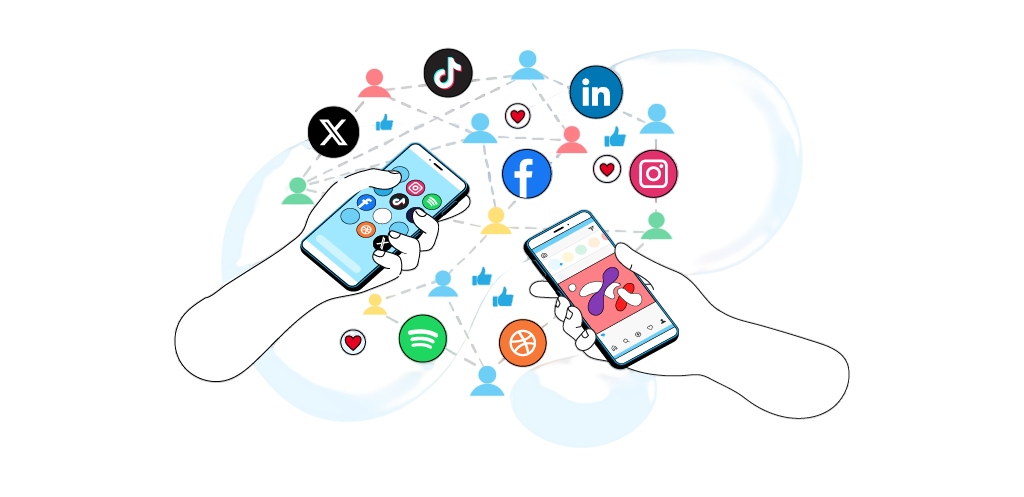
Social media growth in Nepal has changed the communication methods of people. The means of communication, business, self-educating, and entertaining have all changed because of social media. The rapid growth of social media in Nepal is mainly the result of a large number of people who are now using the internet, can afford a smartphone device, and have easy access to digital technology platforms. Nevertheless, while this trend is still growing and developing, it has brought forth some problems as well, such as cybercrime, fake news, personal data issues, and the emergence of a multitude of new risks related to artificial intelligence.
Social Media Usage Trends in Nepal
Nepal’s social media usage is rapidly increasing due to high amount of internet access and many low cost smartphones.
Facebook, TikTok, Instagram, and YouTube are some of the most popular social media sites in Nepal, with a mixed group of users from both rural and urban areas. Most of the users interact with friends and family members through social media, to entertain themselves, to get the latest news, to buy products online, and many more. As a result, social media has become the main medium of daily life for a huge number of Nepali citizens.
The rise in social media in Nepal has created increased digital connection between their young people and their businesses, allowing for new ways to connect to others through communication and commerce. Unfortunately for many users of social media in Nepal, increasing usage means that they will also be exposed to many of the negatives associated with social media, including misinformation, privacy risks, and cyber threats.
Common Cyber Threats on Social Media
The large amounts of personal information shared on social media platforms make them appealing targets for cybercriminals. An increase in users has resulted in online threats to users’ privacy, safety, and well-being, and the way they perceive themselves when online. Users in Nepal are no exception and are equally exposed to these threats as any other country. Such threats include:
- Stealing Information Through Phishing: Phishing has been one of the most popular and widespread types of threats targeting users on social networking sites. Attackers create false friends, pages, or messages to prompt users into clicking on a malicious link or providing personal or financial information (bank account numbers, passwords, OTP, etc).
- Impersonating Users With Fake Profiles: Cyber criminals frequently create fake profiles, or pages, to impersonate an actual person or organization. Impersonation takes place when someone acts like they are you in order to trick others into sending them or giving them your personal information, sending “friends” spam, or harassing other users via social media platforms.
- Spreading Malware Through Links: Malware is sent to an individual via links that they receive from other people via other media. When a person clicks on the link, it downloads the malware onto the user’s computer, giving a malicious hacker access to their files, cameras, and other sensitive data.
- Hacking User Accounts: Social media accounts are very easy targets for hackers when an individual uses a weak password, a password that has been reused or if two-factor authentication (2FA) is not set up for the account. After the account has been hacked it is a common practice that the hacker will use the account either to spam other users or individuals, to get sensitive information from private conversations or to commit scams.
- Manipulating Users Through Social Engineering: Cybercriminals use psychological manipulation to single out an individual’s trust in them. Some of the ways they employ include emotionally blackmailing, scamming, disguising as a victim, and trying to get either money or personal information from the victim’s friends.
Digital Literacy and User Awareness
Social media is also a huge factor in creating and sharing the information we learn every day through communication, as well as in our daily lives. The continued growth of social media has created and will continue to cause the need for stronger digital literacy skills and greater digital user awareness in the number of ways in which you can navigate the use of different social media platforms.
When it comes to digital literacy skills, digital literacy is not just about technological use, but also about using technology in a more responsible and more efficient manner than you normally do. Digital literacy is not just working with the web but includes every digital gadget, technology, and platform that is used in the web.
User awareness refers to being aware of the operations of social networks and understanding the potential risks associated with their usage as well. It requires knowing how to configure your privacy settings, the kind of information that is safe for you to share with others and understanding what fake news is or where you could be victims of online scams by third parties. It recognizes the influence of cyberbullying or offensive content on social networks and includes knowing how algorithms determine the content you get.
Cyber Scams and Online Fraud
Social media is a major component of scams and cybercrime, both around the world and in Nepal, because social media is used excessively, which gives criminals an easy way to remain anonymous while committing fraud.
Scammers use social media and apps, including Facebook, Instagram, TikTok, and WhatsApp, because they have a significant number of users and a variety of means of communication, such as text, video, or image.
Cyber fraud and scam attacks utilize trust and connections with others through phishing, fake profiles, scams, investment frauds, and impersonating others. These scams involve utilizing methods of social engineering to deceive someone into providing them with personal information or to transfer money to them.
Cyberscams and frauds are threatened by increasingly sophisticated attacks, impersonating others’ identities, AI collected data from various sources to commit fraud, and the inability to charge these criminal activities because of operating on a global scale.
Besides money scams, the major risks that are often discussed in relation to social media are the ways in which user data is gathered, tracked, and abused. Hence, issues related to privacy are equally significant as those related to internet frauds.
Privacy Concerns on Social Media Platforms
Social media has become a major change in the way people interact, share, and connect. The digital world is now like one big social network or digital platform where millions of people can communicate, share their experiences and thoughts in a matter of seconds.
People are starting to gain awareness of how data can be collected. They have become alarmed by this continued invasive nature of monitoring and tracking through these new-age applications. As a result, it leads to increasing impressions of mistrust around companies that utilize this type of technology to sell more products; we are all subject to constant tracking of their physical locations, or digital footprints.
With the benefits of social media platforms come some major concerns about privacy. Users are becoming more aware that there are serious risks associated with the amount of their personal information that social media platforms collect, store, and use. Users are also concerned that their private information may be used against them. Privacy related issues facing users of social media platforms in 2025 include unrestricted collection of user data, excessive monitoring of users, and the use of the data by external companies.
Privacy concerns include:
- Data Collection: Social media platforms that collect and share personal information of its users with third-party partners represent a significant threat to privacy, as those platforms collect, aggregate and share a large amount of personal information about its users through its user profiles, posts, likes, shares and interactions which allow them to create user profiles that can be analyzed to provide further opportunity for customized content and advertisements when advertising to those individuals.
- Location Tracking: There are some users who have abused the geotagging feature and have been sharing their location through check-ins on social networking sites. One can easily know a person’s day-to-day activities just by keeping an eye on this data. This is a great chance for criminals to obtain the spots where you will be, keep an eye on your movements, and get to know your likes and dislikes.
- Cyberbullying: Using social media to cyber harass, stalk people, or impersonate them is also possible. You don’t have to be a hacker to commit these types of illegal acts because a business partner or another individual may develop an unhealthy obsession with you.
Effects of Misinformation and Fake News
The expansion and development of social media have enhanced its capacity to spread news and other forms of communication, thus negatively affecting the definition of facts and the number of people who unintentionally take misinformation for facts.
Misinformation can refer to simply wrong or misleading information. This can be as simple as incorrectly relaying the facts of an event. There are many other ways that misinformation arises. By an example, an intentional exaggeration of information can fabricate a content that is misguiding because of the use of clickbait titles or the exaggerated or inaccurate representations. The use of social media as a source of news is increasingly becoming common among people.
As the number of people using social media platforms and sharing their opinions increases, the trustworthiness of information decreases. The maximum reach of individuals has always been the goal of people and organizations, which has resulted in the increase of the posts of news with more sensationalized content. News stories do not include the proper context, so it is very easy for individuals to misunderstand or misinterpret things and quickly share that misunderstanding with others via sharing on social media.
Social media algorithms determine what’s shown on social media. They work to keep you on their site as long as possible, which translates into greater revenues from targeted advertising based on the information the algorithm collects about you through your online behaviour. All social media networks generate revenue using this same method.
Users who post on social media frequently receive greater rewards than infrequent posters because their posts are displayed to more social media feeds, thus generating greater amounts of views, likes, comments, and shares for every post made. Emotional posts generate significant amounts of emotion based reactions; by encouraging high frequency users to continue reposting their successful emotional images, algorithms enable a continuous cycle of misinformation to circulate.
Impact of Social Media on Public Safety
Social media has become an important medium for individuals’ public safety by creating new and complicated means of delivery. It has been used as a means of communication between social service organizations and the communities in which they operate, allowing for the posting of immediate alerts about emergencies and events, as well as supporting direct contact with the community, ultimately saving lives.
Social media has also benefited many during times of crisis. When there is an emergency or disaster taking place, social media allows for the immediate spread of information, including safety and warning information and real-time reports. The ability to receive real-time notifications via social media and engage in the community are both positive aspects of social media in terms of improved preparedness for emergencies and effective response to emergency situations by helping communities and agencies to be able to respond very quickly to citizens during emergencies.
On the other hand, social media also provides new problems to public safety by increasing the risks associated with online threats, online harassment, and the spreading of false information that can escalate into incidents of violence or mass panic.
Online threats, hate speech, and harassment that are carried out through social media can easily become public safety risks when they result in actual violence or harassment. For example, individuals will make threats or issue statements using social media platforms in an effort to provoke others to commit acts of violence or to harm other individuals or groups, which results in physical injury, stalking, or harassment of individuals.
Cyberbullying is also leaving a huge impact on the mental well-being of numerous youngsters due to the continuous exposure to negative comments and false allegations. The inability of many youth to escape from the emotional impact of this kind of activity causes an increase in anxiety and depression.
Emerging Cybersecurity Threats on Social Media
By 2026, new cyber threats via social media will be much more sophisticated than what has been observed today and range from simple to complex. Major new cybersecurity threats for social media are:
- Phishing and Social Engineering: These campaigns are being used to steal passwords or other identifying information from victims and or to embed malicious software on their computers. These types of attacks have become more frequent and sophisticated, requiring users to be alert and use strong authentication solutions to protect themselves from these threats.
- Ransomware and Account Takeover: Social media users who are influencers or public figures are also vulnerable to ransomware attacks. Such an attack could result in the inability of those individuals to access their accounts or the inability of those individuals to access their content, thereby having the potential to severely interrupt their online presence.
- AI-Powered Deepfakes : Deepfakes created with AI technology include images, videos, and sound created by computer software that look incredibly real. Deepfakes can harm individuals’ reputations, influence public opinion, and spread lies on social media platforms. As the number of people making deepfakes rises, the need for new tools to identify and verify them is increasing.
- Identity Theft and Synthetic Identities: With social media, hackers can steal people’s personal information and then create synthetic identities to open fraudulent accounts or commit other acts of crime. These synthetic identities create a greater challenge to identify and can be used to perform a large number of scams or fraudulent campaigns.
- Cyberstalking and Harassment: The harassment and stalking of individuals is easier with the electronic communication provided by social media. Harassment and stalking via electronic communications can create psychological distress for the victim and are generally not as obvious to others.
- Data Breaches and Privacy Risks: The data associated with social media accounts is vulnerable to large scale data breaches, resulting in major privacy issues for both individuals and organizations. Hackers are able to exploit the sensitive information of the victim and then use or sell that sensitive information for further criminal activity.
Promoting Safe and Responsible Social Media Practices
In 2025, promoting safe and responsible social media usage requires a collaborative effort from individuals through diligence, education, and organizations through effective policies that prioritize the protection of privacy, prevention of abuse, and maintenance of a person’s digital well being.
Always Fact Check and Practice Responsible Sharing: Check the facts before you repost to reduce the likelihood of spreading false information. Encourage others to develop good digital literacy skills, which will help them to better understand and critically evaluate social media content.
Creating Unique Strong Passwords and Using Two-Factor Authentication: Creating complex passwords (letters/numbers/symbols) and updating them frequently, along with enabling two-factor authentication, can help reduce access for individuals attempting to access your account.
Managing Privacy Settings: Users should regularly check and modify their privacy settings on their accounts to limit who can view their personal information and what they post. Users should also be aware of any updates that change how a platform uses privacy settings.
Educating Users About Security: Users should be educated about how to identify phishing schemes, scams, and social engineering and should receive continual training to identify the latest security threats and how to appropriately respond to them.
Monitoring and Managing Account Activity: Users should monitor their login history and activity to determine whether or not they have been the victims of malicious users. Establishing an approval process for posting content will assist you in avoiding posting false or harmful information.
Using Caution When Interacting with Others Online & Blocking Suspicious Users: Users should not engage in interaction with unknown or suspicious users, but if they do, users should utilize blocking features to limit users efforts to harass or collect data on them.
Social Media Usage Trends in Nepal
Nepal’s social media usage is rapidly increasing due to high amount of internet access and many low-cost smartphones.
Facebook, TikTok, Instagram, and YouTube are some of the most popular social media sites in Nepal, with a mixed group of users from both rural and urban areas. Most of the users interact with friends and family members through social media, to entertain themselves, to get the latest news, to buy products online, and many more. As a result, social media has become the main medium of daily life for a huge number of Nepali citizens.
The rise in social media in Nepal has created increased digital connection between their young people and their businesses, allowing for new ways to connect to others through communication and commerce. Unfortunately for many users of social media in Nepal, increasing usage means that they will also be exposed to many of the negatives associated with social media, including misinformation, privacy risks, and cyber threats.
Common Cyber Threats on Social Media
The large amounts of personal information shared on social media platforms make them appealing targets for cybercriminals. An increase in users has resulted in online threats to users’ privacy, safety, and well-being, and the way they perceive themselves when online. Users in Nepal are no exception and are equally exposed to these threats as any other country. Such threats include:
- Stealing Information Through Phishing: Phishing has been one of the most popular and widespread types of threats targeting users on social networking sites. Attackers create false “friends”, “pages”, or messages to prompt users into clicking on a malicious link or providing personal or financial information (bank account numbers, passwords, OTP, etc).
- Impersonating Users With Fake Profiles: Cyber criminals frequently create “fake” profiles, or pages, to impersonate an actual person or organisation. Impersonation takes place when someone acts like they are you in order to trick others into sending them or giving them your personal information, sending “friends” spam, or harassing other users via social media platforms.
- Spreading Malware Through Links: Malware is sent to an individual via links that they receive from other people via other media. When a person clicks on the link, it downloads the malware onto the user’s computer, giving a malicious hacker access to their files, cameras, and other sensitive data.
- Hacking User Accounts: Social media accounts are very easy targets for hackers when an individual uses weak password, a password that has been reused or if two, factor authentication (2FA) is not set up for the account. After the account has been hacked it is a common practice that the hacker will use the account either to spam other users or individuals, to get sensitive information from private conversations or to commit scams.
- Manipulating Users Through Social Engineering: Cybercriminals use psychological manipulation to single out an individual’s trust in them. Some of the ways they employ include emotionally blackmailing, scamming, disguising as a victim, and trying to get either money or personal information from the victim’s friends.
Digital Literacy and User Awareness
Social media is also a huge factor in creating and sharing the information we learn every day through communication, as well as in our daily lives. The continued growth of social media has created and will continue to cause the need for stronger digital literacy skills and greater digital user awareness in the number of ways in which you can navigate the use of different social media platforms.
When it comes to digital literacy skills, digital literacy is not just about technological use, but also about using technology in a more responsible and more efficient manner than you normally do. Digital literacy is not just working with the web but includes every digital gadget, technology, and platform that is used in the web.
User awareness refers to being aware of the operations of social networks and understanding the potential risks associated with their usage as well. It requires knowing how to configure your privacy settings, the kind of information that is safe for you to share with others and understanding what fake news is or where you could be victims of online scams by third parties. It recognizes the influence of cyberbullying or offensive content on social networks and includes knowing how algorithms determine the content you get.
Cyber Scams and Online Fraud
Social media is a major component of scams and cybercrime, both around the world and in Nepal, because social media is used excessively, which gives criminals an easy way to remain anonymous while committing fraud.
Scammers use social media and apps, including Facebook, Instagram, TikTok, and WhatsApp, because they have a significant number of users and a variety of means of communication, such as text, video, or image.
Cyber fraud and scam attacks utilize trust and connections with others through phishing, fake profiles, scams, investment frauds, and impersonating others. These scams involve utilizing methods of social engineering to deceive someone into providing them with personal information or to transfer money to them.
Cyberscams and frauds are threatened by increasingly sophisticated attacks, impersonating others’ identities, AI collected data from various sources to commit fraud, and the inability to charge these criminal activities because of operating on a global scale.
Besides money scams, the major risks that are often discussed in relation to social media are the ways in which user data is gathered, tracked, and abused. Hence, issues related to privacy are equally significant as those related to internet frauds.
Privacy Concerns on Social Media Platforms
Social media has become a major change in the way people interact, share, and connect. The digital world is now like one big social network or digital platform where millions of people can communicate, share their experiences and thoughts in a matter of seconds.
People are starting to gain awareness of how data can be collected. They have become alarmed by this continued invasive nature of monitoring and tracking through these new-age applications. As a result, it leads to increasing impressions of mistrust around companies that utilize this type of technology to sell more products; we are all subject to constant tracking of their physical locations, or digital footprints.
With the benefits of social media platforms come some major concerns about privacy. Users are becoming more aware that there are serious risks associated with the amount of their personal information that social media platforms collect, store, and use. Users are also concerned that their private information may be used against them. Privacy-related issues facing users of social media platforms in 2025 include unrestricted collection of user data, excessive monitoring of users, and the use of the data by external companies.
Privacy concerns include:
- Data Collection: Social media platforms that collect and share personal information of its users with third-party partners represent a significant threat to privacy, as those platforms collect, aggregate and share a large amount of personal information about its users through its user profiles, posts, likes, shares and interactions which allow them to create user profiles that can be analyzed to provide further opportunity for customized content and advertisements when advertising to those individuals.
- Location Tracking: There are some users who have abused the geotagging feature and have been sharing their location through check- ins on social networking sites. One can easily know a person’s day- to- day activities just by keeping an eye on this data. This is a great chance for criminals to obtain the spots where you will be, keep an eye on your movements, and get to know your likes and dislikes.
- Cyberbullying: Using social media to cyber-harass, stalk people, or impersonate them is also possible. You don’t have to be a hacker to commit these types of illegal acts because a business partner or another individual may develop an unhealthy obsession with you. They may begin sending you threatening messages, for example.
Effects of Misinformation and Fake News
The expansion and development of social media have enhanced its capacity to spread news and other forms of communication, thus negatively affecting the definition of facts and the number of people who unintentionally take misinformation for facts.
Misinformation can refer to simply wrong or misleading information. This can be as simple as incorrectly relaying the facts of an event. There are many other ways that misinformation arises. By an example, an intentional exaggeration of information can fabricate a content that is misguiding because of the use of clickbait titles or the exaggerated or inaccurate representations. The use of social media as a source of news is increasingly becoming common among people.
As the number of people using social media platforms and sharing their opinions increases, the trustworthiness of information decreases. The maximum reach of individuals has always been the goal of people and organizations, which has resulted in the increase of the posts of news with more sensationalized content.News stories do not include the proper context, so it is very easy for individuals to misunderstand or misinterpret things and quickly share that misunderstanding with others via sharing on social media.
Social media algorithms determine what’s shown on social media. They work to keep you on their site as long as possible, which translates into greater revenues from targeted advertising based on the information the algorithm collects about you through your online behaviour. All social media networks generate revenue using this same method.
Users who post on social media frequently receive greater rewards than infrequent posters because their posts are displayed to more social media feeds, thus generating greater amounts of views, likes, comments, and shares for every post made. Emotional posts generate significant amounts of emotion-based reactions; by encouraging high-frequency users to continue reposting their successful emotional images, algorithms enable a continuous cycle of misinformation to circulate.
Impact of Social Media on Public Safety
Social media has become an important medium for individuals’ public safety by creating new and complicated means of delivery. It has been used as a means of communication between social service organisations and the communities in which they operate, allowing for the posting of immediate alerts about emergencies and events, as well as supporting direct contact with the community, ultimately saving lives.
Social media has also benefited many during times of crisis. When there is an emergency or disaster taking place, social media allows for the immediate spread of information, including safety and warning information and real-time reports. The ability to receive real-time notifications via social media and engage in the community are both positive aspects of social media in terms of improved preparedness for emergencies and effective response to emergency situations by helping communities and agencies to be able to respond very quickly to citizens during emergencies.
On the other hand, social media also provides new problems to public safety by increasing the risks associated with online threats, online harassment, and the dissemination of false information that can escalate into incidents of violence or mass panic.
Online threats, hate speech, and harassment that are carried out through social media can easily become public safety risks when they result in actual violence or harassment. For example, individuals will make threats or issue statements using social media platforms in an effort to provoke others to commit acts of violence or to harm other individuals or groups, which results in physical injury, stalking, or harassment of individuals.
Cyberbullying is also leaving a huge impact on the mental well-being of numerous youngsters due to the continuous exposure to negative comments and false allegations. The inability of many youth to escape from the emotional impact of this kind of activity causes an increase in anxiety and depression.
Emerging Cybersecurity Threats on Social Media
By 2025, new cyber threats via social media will be much more sophisticated than what has been observed today and range from simple to complex. Major new cybersecurity threats for social media are:
- Phishing and Social Engineering: These campaigns are being used to steal passwords or other identifying information from victims and or to embed malicious software on their computers. These types of attacks have become more frequent and sophisticated, requiring users to be vigilant and use strong authentication solutions to protect themselves from these threats.
- Ransomware and Account Takeover: Social media users who are influencers or public figures are also vulnerable to ransomware attacks. Such an attack could result in the inability of those individuals to access their accounts or the inability of those individuals to access their content, thereby having the potential to severely interrupt their online presence.
- AI-Powered Deepfakes : Deepfakes created with AI technology include images, videos, and sound created by computer software that look incredibly real. Deepfakes can harm individuals’ reputations, sway public opinion, and spread falsehoods on social media platforms. As the number of people making deepfakes rises, the need for new tools to identify and verify them is increasing.
- Identity Theft and Synthetic Identities: With social media, hackers can steal people’s personal information and then create synthetic identities to open fraudulent accounts or commit other acts of crime. These synthetic identities create a greater challenge to identify and can be used to perform a large number of scams or fraudulent campaigns.
- Cyberstalking and Harassment: The harassment and stalking of individuals is easier with the electronic communication provided by social media. Harassment and stalking via electronic communications can create psychological distress for the victim and are generally not as obvious to others.
- Data Breaches and Privacy Risks: The data associated with social media accounts is vulnerable to large-scale data breaches, resulting in major privacy issues for both individuals and organizations. Hackers are able to exploit the sensitive information of the victim and then use or sell that sensitive information for further criminal activity.
Promoting Safe and Responsible Social Media Practices
In 2025, promoting safe and responsible social media usage requires a collaborative effort from individuals through diligence, education, and organizations through effective policies that prioritize the protection of privacy, prevention of abuse, and maintenance of a person’s digital well-being.
Creating Unique Strong Passwords and Using Two-Factor Authentication: Creating complex passwords (letters/numbers/symbols) and updating them frequently, along with enabling two-factor authentication, can help reduce access for individuals attempting to access your account.
Managing Privacy Settings: Users should regularly check and modify their privacy settings on their accounts to limit who can view their personal information and what they post. Users should also be aware of any updates that change how a platform uses privacy settings.
Educating Users About Security: Users should be educated about how to identify phishing schemes, scams, and social engineering and should receive continual training to identify the latest security threats and how to appropriately respond to them.
Monitoring and Managing Account Activity: Users should monitor their login History and activity to determine whether or not they have been the victims of malicious users. Establishing an approval process for posting content will assist you in avoiding posting false or harmful information.
Using Caution When Interacting with Others Online & Blocking Suspicious Users: Users should not engage in interaction with unknown or suspicious users, but if they do, users should utilize blocking features to limit Users efforts to harass or collect data on them.
Always Fact Check and Practice Responsible Sharing: Check the facts before you repost to reduce the likelihood of spreading false information. Encourage others to develop good digital literacy skills, which will help them to better understand and critically evaluate social media content.
